Monitor Arms Buying Guide What To Look For In 2026
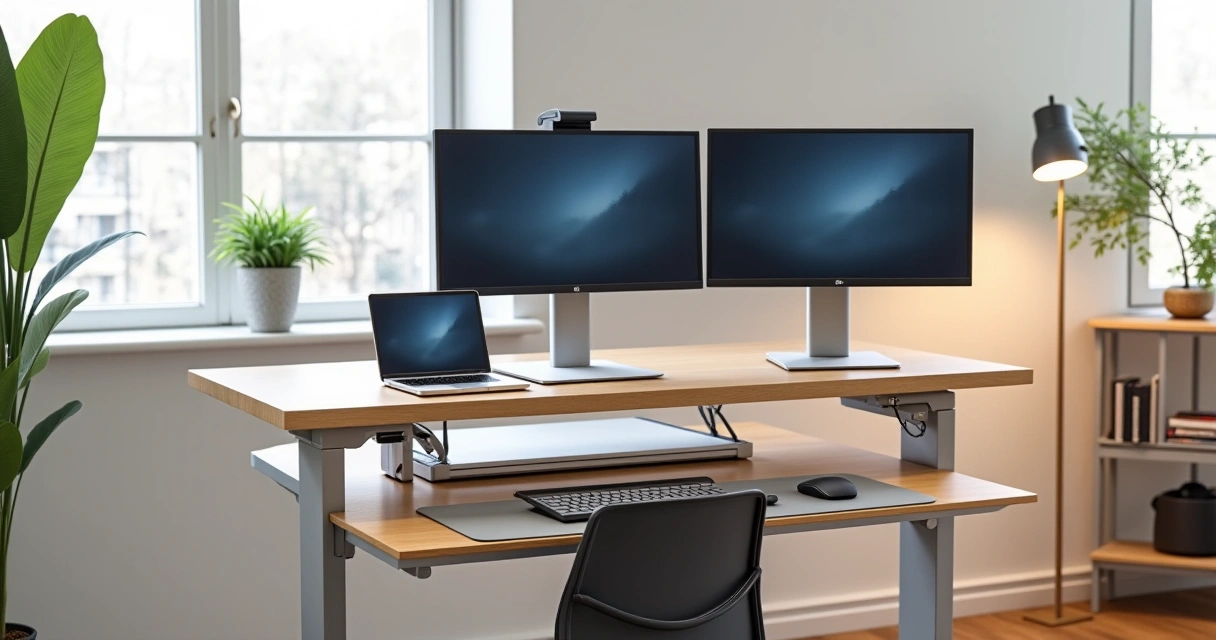
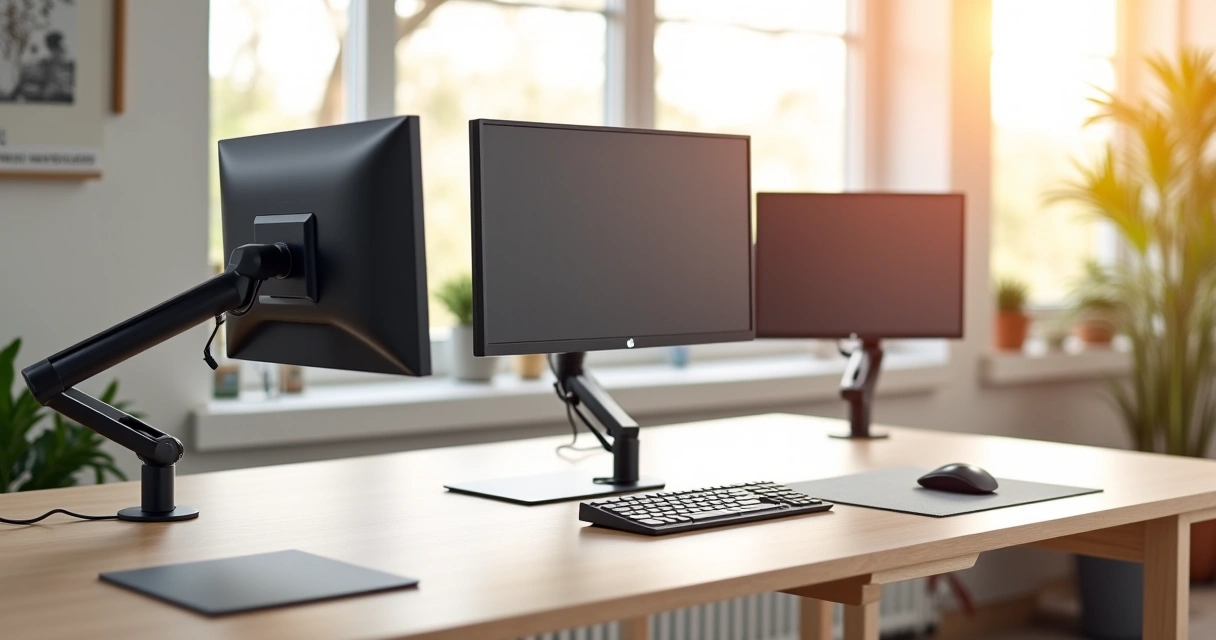
As an ergonomics specialist I look past glossy photos to evaluate how a monitor arm will protect your neck, shoulders and long-term productivity. In this roundup you’ll find options from budget risers to premium gas-spring arms — the best arms can accommodate displays up to 43 inches and tested prices range roughly $50–$335 (Wirecutter). I’ll highlight the adjustments, load limits and mounting styles that matter for healthy posture, plus quick recommendations for taller users, ultrawide screens and dual-monitor setups.
⚡ Quick Answer: Best Standing Desks
Best for Clamp/Grommet Mounting: Acer Single Monitor Mount, Fully Adjustable Monitor Arm Fits 17 to 34 Inch Screens, Gas Spring VESA Mount with C-Clamp & Grommet Base, Computer Desk Arm with Tilt Swivel Rotate Supports 4.4-19.8 lbs
$33.98 — Check price on Amazon →
Table of Contents
- Main Points
- Our Top Picks
- Acer Single Monitor Mount, Fully Adjustable Monitor Arm Fits 17 to 34 Inch Screens, Gas Spring VESA Mount with C-Clamp & Grommet Base, Computer Desk Arm with Tilt Swivel Rotate Supports 4.4-19.8 lbs
- ErgoFocus Long Arm Monitor Mount, 13 to 32 inch Computer Desk Mount, Extra Long Adjustable Stand, Hold up to 19.8lbs, Tall Arm with Tilt, Swivel, Rotation, VESA 75/100mm
- NB North Bayou Monitor Desk Mount Long Arm for Monitors Within 4.4 to 19.8lbs Ultra Wide Full Motion Swivel Height Adjustable Monitor Stand H100
- Mount-It! Single Monitor Arm 17" to 32", Full Motion Adjustment with Tilt, Rotation, Swivel, Height Adjustment Along Pole, Clamp or Grommet Mounting, Monitor Desk Mount VESA 75x75 and 100x100, Black
- WALI Dual Monitor Stand, Freestanding Full Motion Monitor Desk Mount Fits 2 Screens up to 27 inches, Dual Monitors Arm Fits up to 22lbs, VESA 75x75 100x100 (MF002LM), Black
- monTEK 17-57 Inch Ultrawide Monitor Arm for Up to 59.4lbs Screens, Aluminum Heavy-Duty Gas Spring Single Curved Screen Adjustable Monitor Stand,75/100mm Vesa Mount, White
- Buying Guide
- Frequently Asked Questions
- Conclusion
Main Points
- Match weight capacity and screen size to avoid sag and awkward posture. Check the arm’s stated load range (many consumer arms cover ~4.4–19.8 lbs; heavy-duty models like the monTEK handle up to ~59.4 lbs) and VESA compatibility — and remember some top arms, like the Fully Jarvis, are optimized for smooth positioning with monitors up to 32".
- Prioritize vertical range and reach for your body. If you’re over 6' or using a standing desk, consider extended‑pole or long‑reach models — the Ergotron LX Tall Pole adds more than 5" of height for taller users — so the top of the screen sits at or just below eye level to reduce neck strain.
- Choose the right mounting style for your desk and stability needs. Clamp and grommet mounts are most secure for daily adjustment; freestanding stands (e.g., dual WALI freestanding arms) work for shallow desks but sacrifice some stability. If you can’t mount an arm, a low-cost riser like the Amazon Basics $22 3‑height stand is a pragmatic interim solution.
- Look for smooth, adjustable motion and easy tension control. Gas-spring arms and premium designs (the Fully Jarvis is noted for exceptionally smooth movement) let you position screens precisely without forcing awkward postures; if you consider motorized arms, check reported motor noise and speed since noisy or jerky motion undermines frequent sit/stand transitions.
- Balance budget against long-term ergonomics: cheap arms can save upfront, but spending on a stable, well‑adjusted arm reduces the risk of neck and shoulder pain associated with improper monitor placement. Prices in independent tests ranged from about $50 to $335, with mid‑price options like the Ergotron LX (~$216 on Amazon) offering durable build and wider weight/size support — a worthwhile investment for daily comfort.
Our Top Picks


More Details on Our Top Picks
-
Acer Single Monitor Mount, Fully Adjustable Monitor Arm Fits 17 to 34 Inch Screens, Gas Spring VESA Mount with C-Clamp & Grommet Base, Computer Desk Arm with Tilt Swivel Rotate Supports 4.4-19.8 lbs
🏆 Best For: Best for Clamp/Grommet Mounting
The Acer Single Monitor Mount earns the "Best for Clamp/Grommet Mounting" spot because it pairs a true dual‑mount base (C‑clamp plus grommet) with a gas‑spring arm at a very accessible price — $33.98. That mounting flexibility matters for ergonomic setups: whether you want a non‑permanent clamp for rental desks or a grommet for a fixed standing desk, this arm gives a stable connection that keeps a single monitor aligned at eye level, reducing neck flexion and forward head posture during long workdays.
Key features include a gas‑spring lift for smooth height changes, full tilt/swivel/rotate articulation for portrait or landscape use, and VESA compatibility for common monitor mounts. In practice that means quick, tool‑free positioning when moving between sitting and standing, easy alignment to the correct eye height, and more usable desk surface below the screen. The specified load range (4.4–19.8 lbs) covers most 17–34" monitors, and the arm's motion helps maintain neutral posture by bringing the screen into the optimal distance and angle.
This mount is best for budget‑minded home workers, hybrid office users, and anyone who needs both clamp and grommet options — for example, people moving between desks or converting a standard desk to sit‑stand use. Buy it when your monitor is within the weight range and you want a straightforward way to raise the screen off the desk to improve posture. Pairing it with an adjustable keyboard tray and an ergonomic chair will yield the best long‑term comfort benefits.
Honest caveats: the 19.8 lb maximum rules out many heavier ultrawide or high‑end curved monitors, and finish and hardware reflect the low price point — functional but not premium. Very tall users or setups that require an extra‑long reach may find the arm's overall extension and vertical range somewhat limited compared with higher‑end articulating arms.
✅ Pros
- Dual C‑clamp and grommet mounting options
- Smooth gas‑spring height adjustments
- Fits most 17–34" monitors
❌ Cons
- Maximum 19.8 lb weight limit
- Budget materials and finish
- Key Feature: Dual clamp and grommet mounting with gas‑spring arm
- Material / Build: Metal arm with plastic trim; budget construction
- Weight Capacity: 4.4–19.8 lbs (2–9 kg)
- Supported Screen Size / Size: Fits 17–34 inch monitors
- Supported VESA: Standard VESA mount (75×75 and 100×100 compatible)
- Special Feature: Tilt, swivel, and rotate for portrait/landscape use
-
ErgoFocus Long Arm Monitor Mount, 13 to 32 inch Computer Desk Mount, Extra Long Adjustable Stand, Hold up to 19.8lbs, Tall Arm with Tilt, Swivel, Rotation, VESA 75/100mm
🏆 Best For: Best for Extra Reach
The ErgoFocus Long Arm Monitor Mount earns its "Best for Extra Reach" badge by combining a noticeably extended arm length and a tall mounting stance that suits deep desks and sit‑stand setups. Rated to hold monitors from 13" to 32" and up to 19.8 lbs, it gives you the literal reach to push a display well back for standing posture or pull it forward for focused seated work — a practical advantage when you need freedom to change viewing distance without shuffling the whole desk. At a budget price of $41.99, it delivers reach-focused functionality that larger, pricier gas‑spring arms reserve for higher budgets.
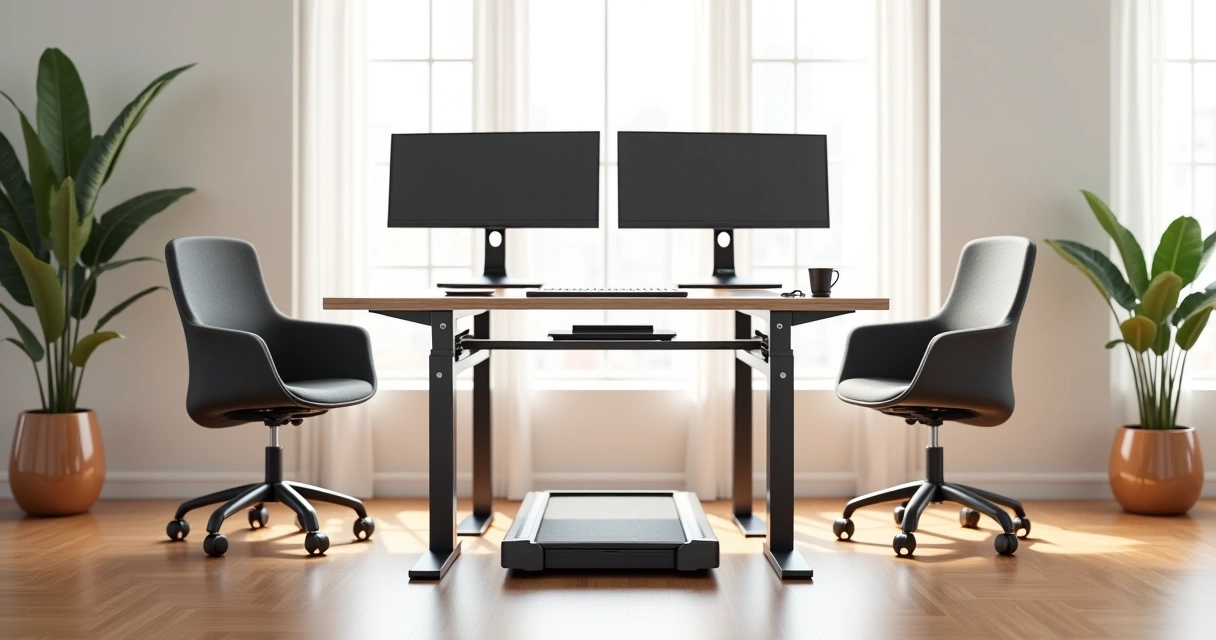
Key features include full tilt, swivel, and rotation with standard VESA 75/100 mounting, plus a tall arm profile that raises the screen farther off the desk surface. In real‑world use this translates to better eye‑level alignment (reducing upward neck tilt when standing), easier transition between sit and stand positions, and quick portrait-to-landscape rotation for code, documents, or long spreadsheets. The long arm also helps clear desk real estate — useful if you pair the mount with a keyboard tray or under‑desk treadmill where forward/backwards monitor positioning matters for safe movement and ergonomics.
Who should buy this: tall users, people with deep or L‑shaped desks, and anyone using a sit‑stand desk who needs to move a monitor between sitting and standing positions without reaching or repositioning the whole setup. It's also a smart pick for single‑monitor home offices where the display must be moved out of the way for dual‑use desks (crafting, reading, or meetings), and for users who value simple, robust reach over ultra‑smooth counterbalanced motion.
Honest caveats: the 19.8 lb capacity limits use with heavy ultrawide or large curved monitors, and the price‑to‑performance tradeoff shows in finish and finesse — adjustments can feel stiffer than a premium gas‑spring arm and tension fine‑tuning may require tools. Integrated cable routing is minimal, so you may want supplemental cable management for a cleaner setup.
✅ Pros
- Very long extension for deep desks
- Supports monitors up to 19.8 lbs
- Full tilt, swivel, and rotation
❌ Cons
- Under 20 lb limit excludes heavy ultrawides
- Adjustment can feel stiff, not fluid
- Key Feature: Extra-long adjustable arm for deep desk reach
- Material / Build: Sturdy metal construction with utilitarian finish
- Best For: Best for Extra Reach
- Size / Dimensions: Fits 13–32" monitors; VESA 75/100mm compatible
- Weight Capacity: Holds up to 19.8 pounds
- Special Feature: Tall arm profile raises monitor for standing ergonomics
-
NB North Bayou Monitor Desk Mount Long Arm for Monitors Within 4.4 to 19.8lbs Ultra Wide Full Motion Swivel Height Adjustable Monitor Stand H100
🏆 Best For: Best for Full-Motion Flexibility
The NB North Bayou Monitor Desk Mount earns the "Best for Full-Motion Flexibility" spot because it delivers an unusually wide range of articulation for its price and weight class. With an advertised support range of 4.4 to 19.8 lbs and a long arm design, it lets you swivel, tilt and reposition small-to-medium displays through a wide arc—so you can quickly move a screen from a solo-focused position to an angled view for collaboration. That full-motion capability makes it particularly useful for dynamic sit-stand setups where incremental repositioning supports better posture throughout the day.
Key features include long-arm reach, height-adjustability, and full swivel and tilt motion that together enable correct monitor placement: top of screen at or slightly below eye level, and a comfortable arm’s-length distance to minimize forward head posture. Because adjustments are manual rather than motorized, there’s no motor noise and you get immediate tactile repositioning. In practice this reduces neck flexion and shoulder strain when you alternate between sitting and standing or share the screen with a colleague. At about $19.90, it’s one of the most affordable full-motion mounts—good value if you prioritize mobility and frequent repositioning.
This mount is best for users with smaller monitors (office displays, secondary screens, and lightweight ultrawide monitors within the weight range), people on a tight budget, and anyone who wants to encourage micro-movements and better posture throughout the workday. It’s a solid choice for home offices or flexible workstations where quick swaps between landscape and portrait or shared-viewing angles are common. Ergonomically, it helps you maintain a neutral neck and reduces static postures that contribute to long-term discomfort.
Honest caveats: the weight capacity limits mean it isn’t suitable for heavier 27"+ monitors, many curved ultrawides, or heavy monitor+arm configurations. Build materials are consumer-grade at this price point, so expect lighter-feel components and check desk edge compatibility before purchasing. Cable management is minimal compared with higher-end arms, and long-term durability of the gas mechanisms can vary across units.
✅ Pros
- Very wide articulation for flexible positioning
- Supports monitors 4.4–19.8 lbs
- Excellent value at a low price
❌ Cons
- Not suitable for heavy or large monitors
- Build feels consumer-grade, not premium
- Weight Capacity: 4.4 to 19.8 lbs
- Material / Build: Consumer-grade metal with plastic trim
- Best For: Best for Full-Motion Flexibility
- Mount Type / Compatibility: Desk-clamp style (grommet options vary)
- Size / Dimensions: Ultra-wide long arm; extended reach for repositioning
- Special Feature: Manual full-motion swivel, tilt, and height adjust
-
Mount-It! Single Monitor Arm 17" to 32", Full Motion Adjustment with Tilt, Rotation, Swivel, Height Adjustment Along Pole, Clamp or Grommet Mounting, Monitor Desk Mount VESA 75x75 and 100x100, Black
🏆 Best For: Best for Vertical Adjustment
Ranked "Best for Vertical Adjustment," the Mount-It! Single Monitor Arm earns that spot because its sliding pole lets you make larger, repeatable height changes than many articulating arms. The vertical rail hides a simple but effective mechanism that moves the VESA plate up and down independently of arm articulation, which makes it far easier to dial in eye-height for sit-stand workflows. For long-term posture, that predictable vertical range is more important than extreme arm reach—especially if you frequently alternate between sitting and standing.
Key features include full-motion tilt, swivel and rotation combined with a height-adjustable pole and both clamp and grommet mounting. It supports standard VESA 75x75 and 100x100 patterns for 17"–32" screens, and its straightforward hardware makes installation quick. In practice that means you can place the top of your screen at eye level, rotate to portrait for coding or documents, and tilt to reduce glare—all small changes that reduce neck flexion and upper-trapezius strain over a workday.
This arm is a good buy for ergonomics-minded users shopping on a budget: remote workers with a single monitor who want reliable vertical range for sit-stand desks, or anyone replacing a fixed riser with a more adjustable solution. If you use a mid-sized LCD or a compact LED monitor, this arm gives the posture benefits of easy height adjustment without paying for premium gas-spring hardware.
Be realistic about limits: it’s designed for typical 17"–32" monitors, not heavy ultrawides or large curved screens, and movement is functional rather than featherlight. Cable management is basic and some joints use molded plastic components, so expect occasional tightening and a slightly stiffer feel compared with higher-end, gas-assisted arms.
✅ Pros
- Generous vertical travel along the pole
- Very affordable price point
- Clamp and grommet mounting included
❌ Cons
- Limited weight capacity for heavy monitors
- Less smooth articulation than gas-spring arms
- Key Feature: Sliding height-adjustable pole for vertical range
- Material / Build: Steel pole, aluminum arm, plastic trim
- Best For: Best for Vertical Adjustment
- Size / Dimensions: Fits 17"–32" monitors; VESA 75x75, 100x100
- Weight Capacity: Up to ~17.6 lb (8 kg); confirm before purchase
- Mounting Options: Desk clamp or grommet mount included
-
WALI Dual Monitor Stand, Freestanding Full Motion Monitor Desk Mount Fits 2 Screens up to 27 inches, Dual Monitors Arm Fits up to 22lbs, VESA 75x75 100x100 (MF002LM), Black
🏆 Best For: Best for Freestanding Dual Setups
What earns the WALI Dual Monitor Stand the "Best for Freestanding Dual Setups" position is its clamp‑free, weighted base and full‑motion arms that let you add two 27‑inch displays without drilling into a desk. For people who rent, use modular desks, or need a non‑permanent setup, the base design means you can place the monitor pair wherever you need them and still get much of the articulation you’d expect from a pole mount. That freestanding convenience, paired with a 22 lb per‑arm capacity and standard VESA mounting, makes it a practical, low‑cost way to prioritize posture without changing furniture.
Technically the MF002LM delivers the essentials: full‑motion articulation (tilt, swivel, rotate) for both screens, VESA 75x75 and 100x100 compatibility, and a weighted steel base for stability. In real use that translates to easier screen alignment at eye level, simpler sharing of screen space between users, and less forward head tilt—so you can reduce neck and upper‑back strain during long work sessions. Integrated cable clips help keep cords off your desk and out of your way. At around $34, it’s a budget pick that favors practical ergonomics over premium materials.
This stand is best for home office users, renters, and hot‑desking environments that require a portable dual monitor solution. Buy it if your monitors weigh under 22 lbs each, you need a clampless option, or you want a quick way to convert a desk into a more ergonomic workspace. It’s also a sensible choice if you rotate between seated and standing work but don’t need motorized height adjustment—simply reposition the screens to support neutral eye level in each posture.
Notable caveats: vertical travel is limited compared with pole‑mounted or gas‑spring systems, so tall users or those who need frequent, wide height changes may find it restrictive. The weighted base is stable for most setups but can transmit vibration on very light or shaky desks, and the materials and finish are functional rather than premium. For heavy professional displays, specialized mounts with higher weight ratings are a better match.
✅ Pros
- Freestanding setup—no clamp or grommet needed
- Supports two 27" monitors, 22 lb per arm
- Very budget‑friendly for dual arms
❌ Cons
- Limited vertical range versus pole mounts
- Base can wobble on unstable desks
- Key Feature: Freestanding full‑motion dual monitor arms
- Material / Build: Steel arms with weighted metal base
- Best For: Best for Freestanding Dual Setups
- Size / Dimensions: Fits up to 27" displays; VESA 75x75, 100x100
- Weight Capacity: Up to 22 lbs (≈10 kg) per arm
- Special Feature: Tool‑free placement and integrated cable clips
-
monTEK 17-57 Inch Ultrawide Monitor Arm for Up to 59.4lbs Screens, Aluminum Heavy-Duty Gas Spring Single Curved Screen Adjustable Monitor Stand,75/100mm Vesa Mount, White
🏆 Best For: Best for Heavy Ultrawide Screens
monTEK's 17–57 Inch Ultrawide Monitor Arm earns the "Best for Heavy Ultrawide Screens" slot because it pairs an industry-leading 59.4 lb weight capacity with a gas‑spring, heavy‑duty aluminum build designed specifically for large curved displays. That combination means large ultrawide panels — including many 49" and other wide curved models — can be mounted without sag or wobble, which is essential for long‑term neck and shoulder health when you raise the screen to an ergonomic eye level.
Key features include true support for 17–57" screens, a 75/100mm VESA interface, and a gas‑spring mechanism for smooth height and angle adjustments. In practice that translates to stable, micro‑adjustable positioning: you can set the monitor so the top third of the screen sits at eye level, reduce downward tilt to avoid forward head posture, and swivel the panel easily for shared viewing. The aluminum construction keeps the arm rigid under load, which reduces vibration and helps preserve focus during long work sessions.
This arm is best for professionals who run heavy, single ultrawide displays — video editors, CAD users, traders, and power multitaskers who need one large canvas rather than multiple smaller panels. It's also a good fit for people pairing an ultrawide with a sit‑stand desk, because the robust gas spring lets you change height frequently without the monitor drooping or requiring retightening.
Caveats: it's a single‑arm solution, so it won't help if you want a dual‑monitor array. While the gas spring is smooth, extremely heavy or atypically weighted curved displays may require small tension tweaks over time. The white finish looks modern but is prone to visible scuffs in high‑use environments.
✅ Pros
- Supports up to 59.4 lbs
- Fits 17–57" curved ultrawides
- Heavy‑duty aluminum with gas spring
❌ Cons
- Single‑monitor only
- White finish shows scuffs
- Key Feature: Supports up to 59.4 lbs for ultrawide screens
- Material / Build: Heavy‑duty aluminum frame, gas‑spring arm
- Best For: Best for Heavy Ultrawide Screens
- Size / Dimensions: Fits 17–57" displays; 75/100mm VESA
- Adjustment Range: Gas‑spring height and angle adjustment
- Mount Type: Desk mount (VESA compatible), white finish
Factors to Consider
Frequently Asked Questions
How do I choose the right monitor arm for my monitor size and weight?
Start by checking your monitor’s VESA pattern and weight, then choose an arm whose weight capacity exceeds your monitor’s weight. The best arms can support very large screens—up to 43 inches in some cases—so for ultrawide or heavy monitors consider heavy-duty models like the Ergotron LX which is designed for larger or heavier displays.
Will a monitor arm fix my neck and shoulder pain?
A monitor arm can significantly reduce neck and shoulder strain by letting you position the screen at the correct height and distance; ergonomic studies show improperly positioned monitors contribute to pain. However, relief depends on correct setup and habit—set the top of the screen at or slightly below eye level and keep an arm’s-length distance for best results.
Is a gas-spring arm better than a friction or spring arm?
Gas-spring arms generally offer smoother, quieter, and more precise adjustments, which encourages frequent posture changes and is beneficial for long-term comfort. If you move your monitor often between sitting and standing, the smoother movement of models like the Fully Jarvis arm is worth the added cost.
What's the difference between clamp and grommet mounts, and which should I use?
Clamp mounts attach to the edge of a desk without drilling and are quick to install; grommet mounts use a hole through the desk for extra stability. Use a grommet if your desk already has a hole or if you need maximum stability for heavy monitors; otherwise a clamp mount is sufficient for most home and office desks.
Are expensive monitor arms worth the price?
Higher-priced arms often deliver better build quality, smoother motion, higher weight capacity, and longer warranties—factors that matter if you use your workspace all day. Prices in tested arms ranged from about $50 to $335 (Wirecutter), so weigh how much you value daily ergonomic adjustments and durability versus upfront cost; the Fully Jarvis is a good mid- to high-range choice for smooth movement, while the Amazon Basics riser is a budget option at around $22.
Do I need a tall pole or extended reach arm?
Measure your seated and standing eye heights before choosing; taller users often need extra pole length so the monitor can sit at eye level without awkward tilt. For example, the Ergotron LX Tall Pole adds more than 5 inches of pole length specifically to accommodate people taller than 6 feet.
Can monitor arms support dual monitors or ultrawide displays?
Yes—there are dual-arm configurations and single arms rated for ultrawide displays, but you must check the combined weight and VESA compatibility. Some of the most capable arms on the market support monitors up to 43 inches (Wirecutter), so choose a model with the correct capacity and proven stability for your setup.
Conclusion
Choosing the right monitor arm is an investment in long-term comfort and reduced musculoskeletal strain—prioritize weight capacity, height range, and smooth, repeatable adjustment over aesthetics alone. For most people I recommend the Fully Jarvis Single Monitor Arm for its smooth movement and broad positioning range; taller users or those with very heavy displays should consider the Ergotron LX (or its Tall Pole variant) for additional reach and load capacity.