

Best Monitor Arms for Spring
🏆 Top Picks at a Glance
 #1
#1
Best Overall
Ergotron – LX Monitor Arm, Single Monitor Desk Mount – fits Flat Curved Ultrawide Computer Monitors up to 34 Inches, 7 to 25 lbs, VESA 75x75mm or 100x100mm – Matte Black
$185.0
Check Price → #2
#2
Runner Up
HUANUO Dual Monitor Stand for 13″–40″, Premium Dual Monitor Mount with USB, Height Adjustable Monitor Stand for 2 Monitors, VESA Mount with Clamp/Grommet Base, Holds 26.4lbs per Arm, HNDS7
$119.99
Check Price →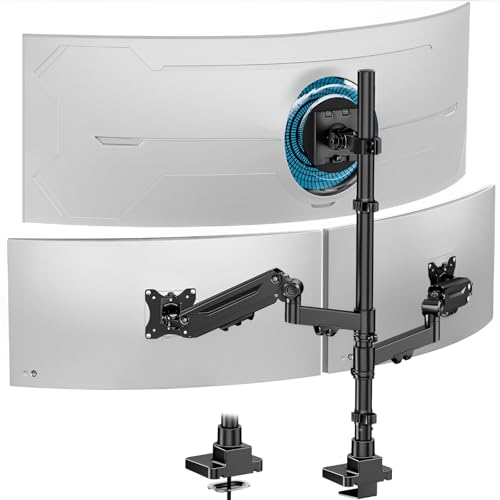 #3
#3
Best Value
Triple Monitor Mount up to 49 inches, Fully Adjustable Heavy Duty 3 Monitor Arm with Gas Spring, Desk Mount for 3 Screens, C-Clamp & Grommet Base, Holds 44 lbs, Black
$89.99
Check Price →Our Top Picks
Affiliate disclosure: if you buy through these links, we may earn a commission at no extra cost to you.
Factors to Consider
Range of motion and adjustability
⚡ Quick Answer
Choose monitor arms with a wide range of motion to support a variety of postures throughout the day. Look for horizontal reach around 12–24 inches and vertical travel of roughly 6–12 inches so you can position screens at eye level whether you're seated or standing. Tilt, swivel, and 360-degree rotation should be accessible with minimal effort to keep the neck aligned and reduce repetitive strain. A flexible arm reduces the need to twist your torso or crane your neck during transitions between tasks.
Table of Contents
Weight capacity and VESA compatibility
Verify the arm can support your monitor's weight plus any mounting plate; most single-monitor arms handle about 2–8 kg per monitor, with larger ultrawide screens demanding higher capacity. Check VESA compatibility (the common patterns are 75×75 mm and 100×100 mm) and ensure the plate ships with appropriate adapters. If you plan to run dual monitors, confirm the system can bear the combined weight and has independent height/tilt settings. Exceeding weight or non‑VESA compatibility can lead to drift or unsafe mounting.
Posture alignment and monitor positioning
For best posture, position the top of the screen at or slightly below eye level and about an arm’s length from your eyes (roughly 50–70 cm, depending on screen size). Center the screen to minimize neck rotation and use the arm’s tilt to keep the gaze slightly downward. If you use two monitors, align them so you don’t have to consistently turn your head to switch focus. Proper alignment supports a neutral spine and reduces shoulder tension over long work sessions.
Desk compatibility and installation
Consider how the arm clamps or grommets into your desk; clamp-on options often require a desk thickness within a typical range (often about 0.5–2 inches). Check that your desk edge or grommet hole can support the mounting hardware’s load without bending or slipping. Ensure there is space for cable management and clearance around the keyboard and any seated/standing transitions. A secure mount prevents micro-adjustments that disrupt posture during work.
Build quality, cable management, and noise
Look for solid materials (steel or aluminum) and smooth, quiet operation; electric or gas-spring arms can be convenient but may add noise (mid-range models often operate around 20–40 dBA). Effective cable management helps keep the surface clear, reducing tugging on arms and encouraging consistent posture. Consider warranty and serviceability for long-term durability, especially if you anticipate frequent height changes or reconfigurations as your workspace evolves in spring.
Frequently Asked Questions
What should I look for in a monitor arm for a standing desk setup?
Prioritize range of motion, weight capacity, and easy height adjustment so you can switch between sitting and standing without compromising posture. Check desk compatibility (clamp or grommet) and ensure VESA patterns match your monitor. A gas-spring or electric arm can make height changes effortless, supporting consistent eye level and neutral neck posture.
How much weight can monitor arms hold?
Most single-monitor arms support about 2–8 kg per monitor, with higher capacities required for large ultrawide screens. If you plan dual monitors, verify the total supported weight and each monitor’s load. Always confirm the combined weight against the arm’s specification to prevent sag or tilt drift.
What height and distance should I aim for to promote good posture?
Ergonomic guidelines recommend placing the top of the monitor at eye level or slightly below and about an arm's length away, typically 50–70 cm depending on screen size. This positioning reduces neck flexion and glare, supporting a relaxed neck and shoulder posture. If you use multiple displays, set them so you don’t repeatedly twist your neck.
Are monitor arms suitable for ultrawide or very large monitors?
Yes, but you must check weight capacity and VESA compatibility for the specific model. Some high-capacity arms support ultrawides up to about 49 inches and weights well above standard monitors, but always verify per-monitor weight and mounting limits. Inadequate support can lead to wobble and extended fatigue over the day.
Do electric or gas-spring monitor arms improve ergonomics versus manual arms?
Gas-spring or electric arms allow height adjustments with one hand, reducing awkward postures or reaching to change position. Research suggests that dynamic height adjustability can lower musculoskeletal strain during long work sessions. If you frequently switch between postures, these arms can help maintain a neutral alignment without added effort.
Can monitor arms reduce neck strain during long work days?
Yes—research in ergonomics indicates that keeping the monitor at eye level and reducing neck extension lowers neck and shoulder discomfort. Consistent alignment also helps minimize repeated micro-movements that contribute to fatigue over time. An adjustable arm makes it easier to sustain a healthy posture as tasks change.
How do I install a monitor arm on my desk safely?
Follow the manufacturer's instructions for clamp or grommet mounting, and ensure your desk can support the load without flexing. Check that cable routing won’t pull or tug the monitor when you adjust height. If you’re unsure, consult a professional to verify stability and avoid compromising posture due to movement or wobble.


