

Best Monitor Arms for Multiple Monitors
🏆 Top Picks at a Glance
 #1
#1
Best Overall
HUANUO Dual Monitor Stand for 13″–40″, Premium Dual Monitor Mount with USB, Height Adjustable Monitor Stand for 2 Monitors, VESA Mount with Clamp/Grommet Base, Holds 26.4lbs per Arm, HNDS7
$119.99
Check Price →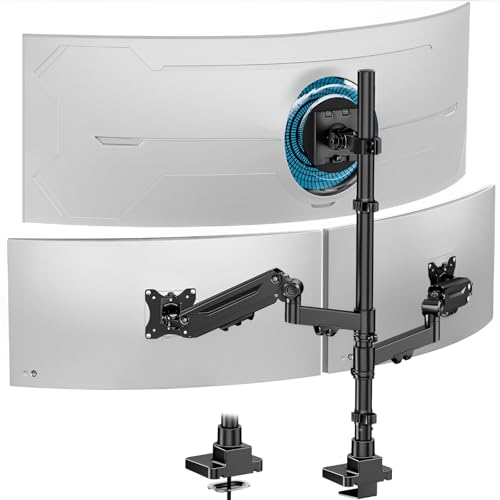 #2
#2
Runner Up
Triple Monitor Mount up to 49 inches, Fully Adjustable Heavy Duty 3 Monitor Arm with Gas Spring, Desk Mount for 3 Screens, C-Clamp & Grommet Base, Holds 44 lbs, Black
$89.99
Check Price → #3
#3
Best Value
Ergotron – LX Monitor Arm, Single Monitor Desk Mount – fits Flat Curved Ultrawide Computer Monitors up to 34 Inches, 7 to 25 lbs, VESA 75x75mm or 100x100mm – Matte Black
$185.0
Check Price →Our Top Picks
Affiliate disclosure: if you buy through these links, we may earn a commission at no extra cost to you.
Factors to Consider
Adjustability range and movement quality
⚡ Quick Answer
To support healthy posture, choose an arm with a broad vertical height range and ample reach so you can position both monitors at eye level without leaning forward. Look for full articulation: tilt, swivel, and a 360-degree rotation to switch between landscape and portrait without twisting your neck. Gas-spring or damped designs typically move smoothly and hold position, reducing the need for constant readjustment. If the arm drifts or requires frequent tightening, your neck, shoulders, and back will pay the price over long workdays.
Table of Contents
Payload, VESA compatibility, and monitor sizes
Ensure the arm's weight capacity matches each monitor you plan to mount, and confirm the VESA pattern (commonly 75x75 mm or 100x100 mm) is supported. For multi-monitor setups, check whether the arm can handle two displays on a single arm or requires a dual-arm configuration; compatibility directly affects stability and long-term posture. Heavier ultrawide or curved panels demand higher-capacity arms and more robust mounting, so always verify total load and center of gravity. Perceived wobble or sag can force you to hunch or crane your neck to read content; choose a model with solid load balance and a locking mechanism.
Mounting options, desk compatibility, and stability
Decide between clamp (desk edge) and grommet (through-desk) mounting based on your desk design, thickness, and whether you may need to move the arm in the future. Clamp mounts are quicker and less invasive but can cause edge-ding on thin desktops; grommets provide solid support but require a hole and adequate clearance. Check the arm's reach and clearance to avoid collisions with keyboards or standing-desk peripherals, especially when you alternate between sitting and standing. A stable base and sturdy joint minimize micro-movements that cause neck strain during long sessions.
Ergonomics, setup, and long-term comfort for multiple monitors
Arrange primary monitor directly in front of you and place secondary displays at a slight inward angle to reduce neck twisting; this keeps your spine aligned and your eyes close to the screen center. Look for cable management features that keep cords tidy and out of the way, so you can adjust height without snagging cables. If you’re using a standing desk, verify that the arm’s height range matches your desk in both seated and standing postures to prevent downward gaze or shoulder shrugging. In sum, a well-configured arm supports sustainable posture and reduces cumulative strain over a typical workday.
Frequently Asked Questions
How many monitors should I mount for good posture?
For most people, two monitors arranged with the primary directly in front and the second to the side near eye level is ideal. Position the top edges at or slightly below eye level to maintain a neutral neck posture, and align the screens so your gaze remains near the center of each display. If you use more than two screens, stagger them to minimize excessive head turning.
What mounting option is best for a standing desk?
Clamp mounts are usually easier to install and work well on most standing desks; grommet mounts offer added rigidity but require a through-desk hole. Choose a mount that reaches your preferred height range without forcing you to stoop or crane your neck, and ensure desk edge clearance won’t collide with keyboard trays. Stability matters for long sessions as you switch between sitting and standing.
Can I mount ultrawide monitors in a multi-monitor setup?
Yes, but check weight and VESA compatibility; many arms support ultrawide displays up to about 34 inches when combined with proper 75x75 or 100x100 mm patterns and adequate payload. With multiple displays, aim to keep the primary monitor near eye level and angle others inward to minimize neck rotation. If a single arm holds two monitors, ensure even weight distribution to prevent tipping or sag.
How important is motor noise or smooth motion?
Quiet, smooth motion is helpful for maintaining focus; many mid- to high-range arms use gas springs or dampers that reduce jerkiness and creaks. If you work in a quiet environment, look for models marketed as low-noise or with damped motion. Cheaper arms may exhibit more clunking or drift, leading to frequent readjustment and neck strain.
Do monitor arms reduce neck and shoulder strain?
Yes. Ergonomic research shows that placing monitors at eye level and at an appropriate distance reduces neck muscle activity and shoulder tension when viewing screens. Proper alignment minimizes the need to twist or lean, supporting sustainable posture during long workdays. A well-positioned arm also helps maintain a neutral wrist and overall posture in both seated and standing configurations.
What about cable management and desk clutter?
Most monitor arms offer built-in cable guides or channels to route cords neatly along the arm; combined with good desk cable management, this reduces snag risk and frees desk space. Clean lines along the desk reduce visual distraction and cognitive load, which can improve focus and comfort. Plan for future accessories by choosing arms with extra channels and modular paths.
What maintenance should I perform on monitor arms?
Periodically check that all mounting screws are tight, joints move smoothly, and the monitors stay balanced; loose joints are a common source of instability that can force awkward postures. Inspect gas springs or friction joints for wear and recalibrate or tighten as needed per the manufacturer guidelines. Regular checks help prevent sudden drops or sagging that would compromise neck and back comfort over time.


