

How to Set Up an Ergonomic Home Office Workspace for Productive Remote Work on St Patrick's Day 2026
As we celebrate St Patrick's Day 2026, it’s the perfect opportunity to revamp your home office setup for optimal comfort and productivity. With more of us working remotely, creating an ergonomic environment isn’t just about comfort—it's a long-term investment in your health, preventing strain, fatigue, and repetitive stress injuries. A thoughtfully arranged workspace supports good posture, reduces discomfort, and helps you stay focused and energized throughout the workday.
Our Top Picks
Affiliate disclosure: if you buy through these links, we may earn a commission at no extra cost to you.
In this guide, I’ll walk you through the essential elements of an ergonomic home office, from adjustable desks to cable management solutions, ensuring your workspace promotes sustained health and productivity. Let’s make your setup both functional and comfortable, so you can tackle your tasks with confidence and well-being.
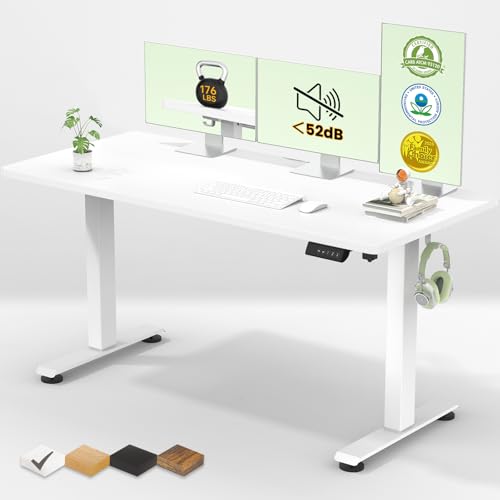
Veken 55 Inch Large Electric Standing Desk,Sit to Stand Up, Heights Adjustable, Work Home Office Computer Table for Study, Walking Pad, Writing, and Games, Wooden Desktop Desks, White
$109.99Check Price

Table of Contents
- Standing Desks: Elevate Your Workstation
- Ergonomic Chairs: Support Your Posture
- Monitor Arms & Laptop Stands: Position for Comfort
- Desk Mats & Keyboard Trays: Optimize Your Surface
- Under-Desk Treadmills & Active Options
- Cable Management & Office Storage
- Desk Lamps & Lighting
- Additional Ergonomic Tips
- Frequently Asked Questions
Standing Desks: Elevate Your Workstation
An adjustable standing desk allows you to alternate between sitting and standing throughout your day—a proven way to reduce sedentary-related discomfort. When selecting a standing desk, prioritize models with a stable, motorized lift mechanism and a weight capacity that exceeds your equipment weight—typically, 220-330 lbs (100-150 kg) is sufficient for most home setups. Look for smooth, quiet adjustments (less than 50 dB noise level) so your work remains distraction-free.
Ensure the desk has an appropriate height adjustment range—ideally, from about 24 inches (61 cm) to 50 inches (127 cm)—to accommodate seated and standing positions comfortably. Your monitor, keyboard, and mouse should all be positioned to promote neutral wrist and elbow postures, which may require additional accessories like monitor arms or keyboard trays.
Ergonomic Chairs: Support Your Posture
An ergonomic office chair is foundational to a healthy workspace. Seek a chair with adjustable seat height (range 16-22 inches), lumbar support, adjustable armrests, and a seat depth that supports your thighs while allowing 2-4 inches of space between the edge of the seat and behind your knees. Proper lumbar support maintains the natural curve of your lower back, preventing slouching and back pain.
In long work sessions, take the time to adjust your chair so your feet rest flat on the floor or on a footrest, with thighs parallel to the ground. This promotes good circulation and reduces pressure on your hips. Don't forget to periodically reassess your chair settings—posture habits are just as important as the furniture itself.
Monitor Arms & Laptop Stands: Position for Comfort
Proper monitor positioning is essential to avoid neck and eye strain. Monitor arms enable you to adjust height, depth, and angle, keeping the top of the screen at or just below eye level and about an arm's length away. For laptop use, an adjustable laptop stand paired with an external keyboard and mouse maintains an ergonomically sound posture, preventing neck flexion and shoulder strain.
When choosing monitor arms, check their weight capacity—most support up to 17-19 lbs (8-9 kg)—and ensure smooth adjustment mechanisms. For desks with limited space, clamp-mounted arms secure the monitor reduce clutter and improve mobility.
Desk Mats & Keyboard Trays: Optimize Your Surface
A high-quality desk mat not only protects your surface but also provides a cushioned wrist support, reducing pressure during long typing sessions. When choosing a mouse pad or desk mat, look for non-slip bases and materials that promote smooth movement and minimize fatigue.
Keyboard trays can be invaluable if your desk height doesn’t naturally position your keyboard and mouse at elbow level. Adjustable trays allow you to set the keyboard height and tilt, supporting neutral wrist posture and reducing the risk of repetitive strain injuries.
Under-Desk Treadmills & Active Options
Adding an under-desk treadmill can promote movement and improve circulation during the workday. Select models with a weight capacity of at least 250 lbs (113 kg), a quiet motor (<45 dB), and adjustable speed controls (0.4-2.0 mph or 0.6-3.2 km/h). This allows you to walk comfortably while working, boosting energy and mental focus.
Be mindful of your posture when walking—keep your back straight and shoulders relaxed. Here, a height-adjustable desk or sit-stand converter is vital for maintaining proper monitor and keyboard positioning during movement.
Cable Management & Office Storage
Cluttered cables can be both a physical and mental distraction. Implement cable management solutions like sleeving, zip ties, or cable trays underneath your desk to keep cords organized and out of your way. Properly routed cables prevent accidental pulls and reduce trip hazards.
Efficient storage—such as filing cabinets, shelving, or desktop drawers—keeps essential supplies within reach while minimizing clutter. Use labeled containers or trays for small items like chargers, pens, and adapters, so your workspace remains clean and ergonomic.
Desk Lamps & Lighting
A well-placed desk lamp with adjustable brightness ensures sufficient illumination, reducing eye strain and fatigue. Opt for LED lamps with adjustable color temperature (warm to cool) to mimic natural light, especially during late hours or in dim rooms.
Avoid glare on your screen by positioning your light source opposite or to the side of your monitor. Consistent, adequate lighting supports focused work and helps maintain circadian rhythms, especially in home environments where natural light varies.
Additional Ergonomic Tips
Remember, ergonomics isn’t just adjustable furniture; it involves habits. Take regular breaks—stand, stretch, or walk around every 30-60 minutes. Maintain awareness of your posture, ensuring your ears, shoulders, and hips align neutrally. Hydration and proper nutrition also play roles in sustaining focus and energy levels.
Frequently Asked Questions
How high should my desk be for standing work?
Generally, your desk height should be adjustable to roughly elbow height when standing, usually around 38-42 inches (97-107 cm), but always customize based on your own height to maintain a neutral shoulder position.
What is the best way to support my lower back at my desk?
Use a chair with proper lumbar support and consider a lumbar cushion if needed. Also, keep your feet flat on the floor, knees at 90 degrees, and sit back in your chair to fully support your lower back.
Can I use a laptop on its own for ergonomic work?
Limited use is okay, but prolonged work on a laptop without elevation leads to neck strain. Use a laptop stand and external keyboard/mouse for better ergonomics, maintaining the screen at eye level.
How often should I change my position during the day?
Aim to switch between sitting and standing every 30-60 minutes. Incorporate movement breaks or short walks to reduce muscle stiffness and improve circulation.
How do I choose the right monitor arm?
Select one with sufficient weight capacity for your monitor, adjustability, and stability. Ensure it allows easy rotation, height adjustment, and tilt to create an optimal viewing position.
What accessories can help reduce fatigue during long work sessions?
Consider wrist rests, footrests, anti-fatigue mats, and monitor risers. These accessories promote proper alignment and reduce pressure points, contributing to long-term comfort.
Creating an ergonomic home office workspace on St Patrick's Day 2026 isn’t just a one-time setup—it’s an ongoing process of adjustment and mindful habits. By investing in quality adjustable furniture, supporting tools, and healthy movement routines, you set yourself up for sustained comfort, productivity, and long-term health. Take the first step today and transform your workspace into a sanctuary of well-being.


