

Desk Mats vs Under-Desk Treadmills: Which Should You Buy in 2026
If you spend most of your workday at a desk, the choice between a desk mat and an under-desk treadmill is not just a gear decision. It is a posture, comfort, and movement decision. A desk mat is a low-friction, low-risk accessory that keeps your workspace tidy and protects the surface. An under-desk treadmill is a powered movement tool that can turn part of your workday into light walking. The right answer depends on whether your main goal is a cleaner, more comfortable desk setup or a way to add movement without blocking your ability to work.
This comparison is for people who already use a desk for work, study, or remote tasks and are trying to reduce the health costs of long sitting or standing sessions. It is especially useful if you are deciding whether to spend money on a simple desk accessory or a more expensive under-desk walking pad. The short version is that desk mats are better for basic desk comfort and surface protection, while under-desk treadmills are better for adding low-intensity movement during work. They are not substitutes for each other, and the best setup may include both.
Affiliate disclosure: if you buy through these links, we may earn a commission at no extra cost to you.
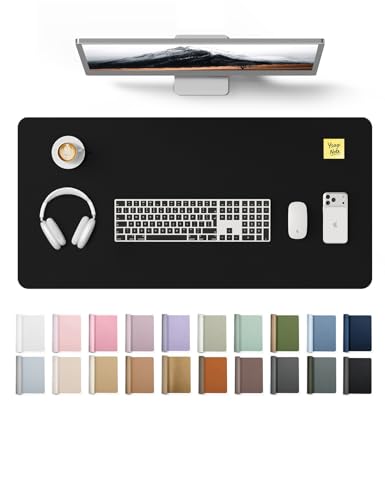


Table of Contents
- Models in this comparison
- Quick Verdict
- About Desk Mats
- About Under-Desk Treadmills
- Head-to-Head: Cost and Value
- Head-to-Head: Comfort and Posture
- Head-to-Head: Practicality and Daily Use
- Head-to-Head: Reliability and Common Complaints
- Who Should Choose Desk Mats?
- Who Should Choose Under-Desk Treadmills?
- Our Verdict
- Frequently Asked Questions
- Sources & References
Models in this comparison
Affiliate disclosure: if you buy through these links, we may earn a commission at no extra cost to you.
Quick Verdict
Choose Desk Mats if...
- You want a low-cost, low-maintenance way to protect your desk surface and keep cables, notes, and small items organized.
- You need a stable, comfortable surface for typing, writing, or placing a laptop without adding powered equipment under your desk.
- You are trying to improve desk comfort first, and you do not need a built-in movement tool to increase daily steps.
Choose Under-Desk Treadmills if...
- You want to add low-intensity walking to meetings, calls, writing sessions, or admin work without leaving your desk.
- You have enough clearance under your desk for a low-profile walking pad and can tolerate a powered device in your workspace.
- You are focused on increasing daily movement and steps, and you are willing to manage noise, floor space, and maintenance.
| Factor | Desk Mats | Under-Desk Treadmills |
|---|---|---|
| Relative Cost (source-bound only) | No source-bound price range is available in this comparison. | $80 to $500+ per 7 Best Under-Desk Treadmills for Standing Desks (2026). |
| Best For | Protecting the desk surface, organizing small items, and improving basic desk comfort. | Adding low-intensity walking during work and increasing daily movement without dedicated exercise time. |
| Setup Difficulty | Very low. Place the mat on the desk and use it immediately. | Moderate. Requires clearance, floor space, power access, and a workable stride length. |
| Reliability | High for basic desk protection and organization, with minimal moving parts. | Variable. Motor noise, belt shifting, and inaccurate speed or calorie displays are common complaint areas. |
| Key Advantage | Simple, quiet, and easy to use without changing your posture or workspace layout. | Can help you walk at low speeds while working, which may increase step count and reduce time spent sitting or standing still. |
| Main Drawback | Does not add movement and does not address sedentary work directly. | Cost, noise, floor clearance, and daily tolerance can make it less practical for some workspaces. |
About Desk Mats
A desk mat is one of the simplest ergonomic accessories you can add to a workstation. Its job is not to move your body; it is to make the desk surface more usable. A good mat can protect the desk from scratches, spills, and wear while giving you a consistent surface for typing, writing, or placing a laptop. For people who work at the same desk every day, that consistency matters because it reduces the small frictions that make a workstation feel uncomfortable over time.
From a posture standpoint, a desk mat is a support tool, not a correction tool. It does not replace proper chair height, monitor placement, or a healthy sit-stand routine. But it can help keep your workspace stable, which supports better hand and wrist positioning and reduces the chance of cables or objects shifting while you work. If your main problem is a cluttered or uncomfortable desk, a mat is a practical first step. If your main problem is too little movement, a mat alone will not solve it.
The biggest advantage of a desk mat is simplicity. It does not require power, maintenance, or a large floor footprint. It is also less likely to create noise or vibration that interferes with calls, focus, or nearby coworkers. That makes it a good fit for shared offices, quiet home offices, and anyone who wants a low-risk upgrade. The limitation is just as clear: a desk mat improves the desk, not your movement pattern.
About Under-Desk Treadmills
Under-desk treadmills are low-profile walking machines designed to fit beneath a standing desk. According to Under Desk Treadmill: The 2026 Buying Guide - talkgyms.com, they are usually 3 to 5 inches tall, have no permanent handrails, and are built so users can walk at 1 to 4 mph while working. The category includes flat walking pads, incline walking pads, and hybrid models with removable handles. The practical goal is not to run or train hard; it is to make light movement possible during work tasks such as meetings, writing, calls, or admin work.
The health case for an under-desk treadmill is movement. 7 Best Under-Desk Treadmills for Standing Desks (2026) notes that walking while working is described as burning 2 to 3 times more calories than standing still and can increase daily step count without dedicated exercise time. It also reports that most people find they can comfortably hit 8,000 to 12,000 extra steps per day without dedicated exercise time. That is the main reason people buy these devices: not to replace a gym session, but to reduce the amount of the workday spent completely still.
The tradeoff is that under-desk treadmills are more complicated than desk mats. Best Walking Pads (2026): Under-Desk Treadmills That Make Sense emphasizes that the specs that matter most for daily use are clearance height, deck length relative to stride, top speed, noise output, and how easily one person can move and store the unit. It also recommends alternating between sitting, standing, and slow walking rather than trying to walk through an entire workday. For desk use, the priority should be a flat, quiet, portable, and low-clearance model that you can tolerate every day, not a dramatic horsepower number or a full-treadmill-style setup.
Head-to-Head: Cost and Value
These two products are not equivalent scopes, so cost comparison needs a limitation first. A desk mat is a single desk accessory, while an under-desk treadmill is a powered movement device with a motor, belt, and frame. Because of that, they should not be compared as if they solve the same problem. The source-bound price data available here covers under-desk treadmills only: 7 Best Under-Desk Treadmills for Standing Desks (2026) lists a range of $80 to $500+, and notes that price does not always correlate with quality because some lower-priced pads outperform more expensive ones in durability.
For desk mats, there is no source-bound price range in this comparison, so the honest answer is that cost depends on size, material, and finish. The value question is different for each product. A desk mat is a low-cost comfort and protection upgrade. An under-desk treadmill is a higher-cost movement upgrade whose value depends on whether you will use it consistently. If you only need a better desk surface, a treadmill is likely overkill. If your goal is to add daily movement, a mat alone will not deliver that benefit.
Head-to-Head: Comfort and Posture
A desk mat supports comfort by making the desk surface more stable and easier to use. It can help keep your hands, wrists, and typing surface in a more consistent position, which is useful for long work sessions. It does not, however, change your posture in the way chair height, monitor distance, or desk height do. Think of it as a comfort layer, not a posture system. If your posture is already reasonable, a mat can make the workspace feel more polished and less irritating. If your posture is poor, a mat will not fix the underlying setup.
An under-desk treadmill supports comfort in a different way: by reducing the health cost of long periods of sitting or standing still. Best Walking Pads (2026): Under-Desk Treadmills That Make Sense recommends alternating between sitting, standing, and slow walking, and it suggests budgeting for an anti-fatigue mat for standing-only blocks. That matters because standing all day is not automatically healthier than sitting all day. The better pattern is variation. A walking pad can help you move during lower-focus tasks, but it should not become a reason to stand or walk through every task, especially if it causes fatigue, noise, or balance issues.
Head-to-Head: Practicality and Daily Use
Daily practicality is where desk mats have a clear advantage. They require almost no setup, no power, and no floor space. You can place one on a desk and start using it immediately. They are also less likely to interfere with calls, focus, or nearby people. If your workspace is small, shared, or quiet, a desk mat is the easier choice. It is also the easier choice if you want a low-maintenance upgrade that does not require you to think about maintenance, belt alignment, or motor noise.
Under-desk treadmills require more thought before purchase. The specs that most directly affect a purchase, according to Under Desk Treadmill: The 2026 Buying Guide - talkgyms.com, are clearance height, deck length relative to stride, top speed, noise output, and how easily one person can move and store the unit. That means you need to check your desk clearance, floor type, and available space before buying. You also need to be realistic about use. The best under-desk walking pads are usually quieter, flatter, easier to move, and less dramatic than gym treadmills, and should run at 1 to 3 mph without shaking a monitor, according to Best Walking Pads (2026): Under-Desk Treadmills That Make Sense. If a pad is too loud, too tall, or too hard to move, it will not get used.
Head-to-Head: Reliability and Common Complaints
Desk mats are simple, which usually means fewer failure modes. The main reliability concerns are durability, edge wear, and whether the surface stays flat and stable. They are unlikely to create major disruptions in your workday. If a mat wears out, the replacement cost is low and the downtime is minimal. That makes them a reliable choice for people who want a predictable, low-maintenance desk accessory.
Under-desk treadmills have more moving parts, so reliability depends more on daily tolerance and maintenance. 7 Best Under-Desk Treadmills for Standing Desks (2026) reports that noise level is the number one complaint across all walking pads, mentioned in 34 percent of negative reviews. It also reports that belt shifting is mentioned in 22 percent of negative reviews, and inaccurate speed or calorie displays are mentioned in 18 percent of negative reviews. Those are not small details. If the belt shifts, the device may feel unsafe. If the speed display is wrong, your movement plan becomes less reliable. If the motor is too loud, it can make calls and focused work harder.
Who Should Choose Desk Mats?
Choose a desk mat if your priority is a cleaner, more comfortable, and better-protected desk. It is the right choice for people who want a simple upgrade without adding powered equipment, floor clutter, or maintenance. It is also a good fit for shared offices, quiet workspaces, and anyone who wants to improve desk organization without changing their movement routine. If you already have a reasonable sit-stand routine, a mat is a sensible comfort addition rather than a health transformation.
Who Should Choose Under-Desk Treadmills?
Choose an under-desk treadmill if your main goal is to add low-intensity movement to your workday. It is a better fit for people who sit or stand for long periods and want a way to increase step count without leaving their desk. You should also have enough clearance under your desk, a floor that works with the unit, and a realistic plan for using it during lower-focus tasks. If you are looking for a simple desk accessory, a treadmill is probably too much. If you are looking for a movement tool that fits under a standing desk, it is worth considering.
Our Verdict
For most people, the better first purchase is a desk mat. It is cheaper, simpler, quieter, and easier to use, and it directly improves desk comfort without requiring major changes to your workspace. But if your main health goal is to reduce the amount of time you spend sitting or standing still, a desk mat will not do that. In that case, an under-desk treadmill is the more meaningful choice, provided you can tolerate the noise, clearance, and maintenance. The best answer is not to treat them as competitors. A desk mat improves the surface you work on. An under-desk treadmill helps you move while you work. If you can afford both, use the mat for comfort and the treadmill for movement. If you can only choose one, choose the desk mat for basic comfort, or the treadmill if daily movement is your priority.
Frequently Asked Questions
Can a desk mat replace an under-desk treadmill?
No. A desk mat improves desk comfort and surface protection, but it does not add movement. If your goal is to increase daily steps or reduce time spent sitting or standing still, a desk mat alone will not do that.
Is an under-desk treadmill worth it if I already have a standing desk?
It can be worth it if you want to add low-intensity walking during work. The value depends on whether you will use it consistently and whether the unit fits your clearance, floor, and noise tolerance. It is not a replacement for proper desk height, chair setup, or a balanced sit-stand routine.
What matters most when buying an under-desk treadmill?
Buy for daily tolerance first. Low motor noise at 1 to 2 mph, a belt long enough for a natural stride, wheels that work on your floor, and a height low enough to fit under furniture matter more than maximum speed or app features, according to Best Walking Pads (2026): Under-Desk Treadmills That Make Sense.
Should I walk all day on an under-desk treadmill?
No. Alternating between sitting, standing, and slow walking is recommended over trying to walk through an entire workday, according to Best Walking Pads (2026): Under-Desk Treadmills That Make Sense. Use it during lower-focus tasks, and keep standing-only blocks comfortable with an anti-fatigue mat if needed.
Which is easier to use in a small home office?
A desk mat is usually easier. It does not require floor space, power, or clearance under the desk. An under-desk treadmill can work in a small office, but only if the unit fits under the desk, is quiet enough, and can be moved or stored without difficulty.


