

Best Ergonomic Chairs For Summer 2026
🏆 Top Picks at a Glance
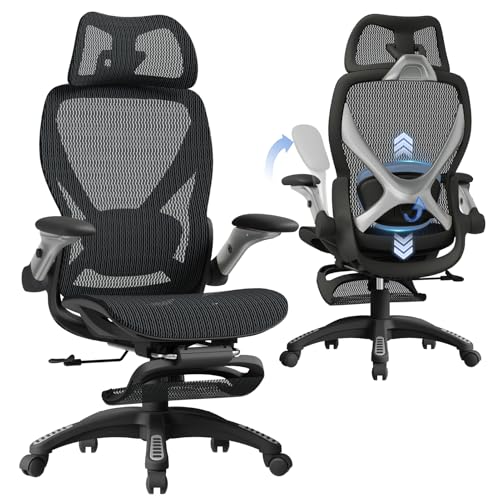 #1
Best Overall
ELABEST X100 Ergonomic Mesh Office Chair with Footrest, Big and Tall Hone Desk Chair with 5D Flip-Up Arms, Adjustable 3D Lumbar Support,Gaming & Executive Computer Chairs
$314.99
Check Price → #2
Runner Up
Ergonomic Office Chair with Footrest, 90-145° Reclining Mesh Desk Chair
$149.99
Check Price → #3
Best Value
Marsail Ergonomic Office Chair: Office Desk Chair with High Back Mesh and Adjustable Lumbar Support Rolling Work Swivel Task Chairs with Wheel 3D Armrests and Headrest
$139.99
Check Price →A cool, supportive chair can make the difference between finishing a summer workday comfortably and ending it with a stiff neck, hot back, or aching hips. This roundup compares six office and gaming-style chairs, focusing on mesh breathability, lumbar support, armrest adjustability, reclining range, footrest usefulness, and everyday posture—not just feature counts. Long-term comfort and durability deserve more weight than a five-minute showroom sit. We’ll start with fit, then weigh each chair’s support and ventilation against your desk height, body size, and working habits.
⚡ Quick Answer: Best Ergonomic Chairs
Best for Big and Tall: ELABEST X100
Quick comparison: The other five cover a reclining mesh chair with a footrest; a high-back mesh chair with adjustable lumbar support, 3D armrests, and a headrest; a gaming-style chair with lumbar support; a black mesh chair with adjustable lumbar support; and a mid-back swivel chair.
$314.99 — Check price on Amazon →
Table of Contents
Main Points
- Make fit the first filter. Measure your desk and match it to the chair’s seat-height range so your feet rest flat on the floor or footrest and your knees stay near hip level. The Spruce notes that shorter users often need a higher maximum seat height, while taller users need a higher minimum.
- Choose mesh for summer airflow, but do not confuse breathability with support. The ELABEST, the 90–145-degree reclining chair, the Marsail, and one TRALT model advertise mesh elements, while the BestOffice is a simpler mid-back option. The Spruce praised breathable mesh backs, and ErgoRated treats mesh-versus-foam construction as a central comparison, so check whether the seat, lumbar area, and frame still feel supportive after extended sitting.
- Use footrests and recline to change posture—not to work in a collapsed position. The ELABEST and reclining mesh chair include footrests, and the latter advertises a 90–145-degree range; use those features for short posture changes, reading, or recovery breaks while keeping your lower back supported. The Spruce cautions that active seating and perching tools are better for shorter intervals than as automatic replacements for a full-time ergonomic chair.
- Prioritize adjustments that solve a real alignment problem. Look closely at the ELABEST’s advertised 5D flip-up arms and 3D lumbar support, the Marsail’s 3D armrests, headrest, and adjustable lumbar support, and the TRALT chairs’ lumbar-support options. Set armrests so your shoulders can relax, position lumbar support at your belt line, and treat a headrest as optional rather than a reason to push your head forward.
- Verify weight capacity and long-term support instead of trusting labels such as “big and tall.” Reference examples cited by The Spruce range from 250 pounds for one chair to 350 pounds for another and 400 pounds for a third, showing that capacity varies meaningfully by model. These manual chairs have no motor-noise specification to compare, so spend that attention on the exact manufacturer capacity, seat-height range, return policy, warranty, and whether the base remains stable when you recline or shift position.
Our Top Picks
Affiliate disclosure: if you buy through these links, we may earn a commission at no extra cost to you.
Factors to Consider
Frequently Asked Questions
What seat height do I need for a standing desk?
Measure the raised desk height and select a chair that keeps your elbows near the work surface with your shoulders relaxed, while your feet rest on the floor or a footrest. The Spruce’s guidance is to compare the full adjustment range with your stature: shorter users often need a higher maximum, and taller users need a higher minimum.
Are standing-desk chairs suitable for sitting all day?
They are not always suitable for full-day use. The Spruce says standing-desk chairs and stools generally are not replacements for standard office chairs, and active stools are better for shorter intervals; for eight-hour workdays, choose stable back and lumbar support, a suitable cushion, and enough adjustment to change posture without losing foot support.
Is mesh or foam better for a hot office?
Mesh backrests usually offer more airflow, while shaped foam may provide a more familiar pressure-distributing seat; the better choice depends on whether the material keeps you cool without creating pressure points. The Spruce praised breathable mesh backs, and ErgoRated treats mesh versus foam as a key comparison, so assess both ventilation and support rather than choosing on material name alone.
Which chair works for a 34- to 36-inch counter-height desk?
Look for a drafting or counter-height model whose seat range overlaps your desk and your leg length. For a 34- to 36-inch counter, a 23.62- to 31.5-inch seat-height range and a 350-pound capacity can be useful benchmarks; that is a better starting point than adapting a standard office chair beyond its range.
How much weight capacity should an ergonomic chair have?
Choose a rated capacity comfortably above your body weight and compare it with seat width, depth, height range, and warranty; a larger number cannot correct a seat that leaves your feet unsupported or pushes you away from the backrest. Comparable chairs may list capacities from 250 to 400 pounds, but the rating still needs to match the rest of the fit.
Is a size-specific chair or a flexible-back chair better for long workdays?
Neither is universally better: a size-specific design with adjustable lumbar support and breathable mesh may suit one person, while a flexible backrest and cushioned seat may better fit another. Match the chair’s dimensions and materials to your body, and choose the back movement and cushion support that better fit your posture and movement habits.
Are refurbished ergonomic chairs worth considering?
They can be, especially when the warranty and return policy let you verify fit at home. Refurbished models may cost about $400–$600 versus roughly $1,099 new; compare replacement parts, mechanism condition, and coverage before treating the lower price as a bargain.
Can I use an ergonomic chair with an under-desk treadmill?
Use them as separate modes: move a wheeled chair completely off the belt before walking, and return to a stable seated position when you need concentrated keyboard or mouse work. Motor noise belongs to the treadmill, not the chair, so check the treadmill’s noise specification and vibration behavior separately rather than assuming a good chair makes the whole setup ergonomic.
Conclusion
For most home-office buyers, start with a breathable, fully adjustable chair whose seat range matches both your standing desk and your body; the TRALT Office Chair Ergonomic Desk Chair - Gaming Chair with Lumbar Support is a reviewed option to consider. Choose a counter-height or drafting model only when you truly need that geometry, and spend premium or refurbished budget on proven fit, back support, and warranty coverage so your posture and comfort hold up through long summer workdays.


